
Abstract
Excerpted From: Andrew J. Douglas and Jared A. Loggins, From the Ashes of This Destruction: A Conversation on Black Study and the Possibility of the Black University, 106 Boston University Law Review 1193 (May 2026) (97 Footnotes) (Full Document)
 Jared Loggins: I feel compelled to open this discussion with Palestine and the failure of our higher education institutions on so many levels. There are no words to adequately capture the weight and scale of cruelty, destruction, suffering, and death at the hands of Israel’s despotic government. It is genocide. There are no universities standing in Gaza. It is epistemic violence and scholasticide. We are talking about complete decimation of Palestinian life and institutions. We are talking about the razing of libraries, schools, and heritage sites. Whole families wiped out. We have failed to “face the worst” as George Kateb once put it. Higher ed institutions are far from blameless. Students, staff, and faculty alike have been subjected to a nasty campaign of intimidation and censure. Every word of our exchange is bloodied by complicity. What are we to make of the claim that universities are spaces of free inquiry, given how institutions responded to the encampments and divestment campaigns since October 7? Institutions harassed students for taking a stand; some institutions even handed over students’ information to the federal government. What are we to make of institutions that arrest, expel, censure, and malign students, faculty, and staff because of the positions they take? What is the nature of institutions that allow for the conflation of anti-Zionism and antisemitism?
Andrew Douglas: It’s also a failure of institutional analysis: a failure of our role as critical thinkers and teachers to apply our lenses of analysis to the conditions of our labor. We work, live, and learn in institutional settings that are deeply integrated into the circuits of capitalism and empire, but so many in our ranks fail to reckon with this. Thanks for starting us off with these sober observations about genocide and empire and this question about our responsibilities as academic workers. Maybe I can ask you to reflect a bit more on this notion of vocation as it grows out of the Black Studies tradition, which anchors so much of your work.
Jared Loggins: I am inspired by Vincent Harding. His essay The Vocation of the Black Scholar and the Struggles of the Black Community is a signal contribution to thinking about the relationship between vocation, study, and the moral responsibility of intellectuals to be in community with the dispossessed. Harding talked about Black study, to be distinguished from Black Studies as a departmental project within the university. Black study makes a moral and ethical claim about a commitment to the wholeness of Black life and being. Black study advances an epistemological critique of Western civilization, with the understanding that Black critique drives toward an emancipated future. It would follow that the vocation of Black study is a vocation that involves an analysis of the conditions delimiting critique and vision within the Western academy. Harding thought that Black critique needed to find “liberated grounds on which to gather” precisely because of the ways that the Western academy compels alienation from the soul of human problems. He was not sure that formal institutions ought to be the nucleus of Black study. The other idea is a political horizon drawn from the legacy of Black radicalism inside, but most often outside, of the academy. Black radicalism, at its best, demonstrates a profound concern regarding the self-authorizing capacities of ordinary people. I am talking about people like Toni Cade Bambara, Vincent Harding, W.E.B. Du Bois, June Jordan, Walter Rodney, and C.L.R. James. They concerned themselves with freedom as a practice built at the level of communal organization. The modern university is not concerned with grounding in the community, let alone with the kinds of principles that Black radicals take to be of paramount importance: a commitment to the free development of all, the rejection of imperialism, and free and open inquiry. I find Cade Bambara’s notion of the Black University concept so richly suggestive. I want to come back around to a discussion of it, but let me pause here and ask you to reflect on the stakes of this conversation about the future of higher education. What are you thinking?
Andrew Douglas: Your comments raise for me a question about the framing of this conference. This notion that “universities are meant to be guardians of democracy and bulwarks against authoritarianism” and that “our most powerful universities” have let us down. Maybe we ought to scrutinize that possessive grammatical construction. Whose universities are we talking about? Has Columbia University--“King’s College,” as it was once called--ever been a guardian of democracy? Has Harvard ever been a guardian of democracy? Today’s most celebrated universities, the agenda-setting institutions that dominate media coverage of the higher education sector, have been some of the most efficient, effective, and durable inequality-producing machines of the modern era. I think it’s important that we not delude ourselves. Bulwarks against fascism are not built in the halls of the Ivy League. Antifascist organizing calls for the dissolution of a certain model of the university--one that is subservient to capital and empire, that belongs to their logic, that is literally owned as property by trustees who are legally bound to protect asset value. The irony, of course, is that this very model of the university is now being destroyed by the world it has ushered into existence. And while this implosion is not how we would have drawn up any phase of a transition to a freer and more sustainable world, we have to seize the opportunity to reimagine the university, to build something new from the ashes of this destruction.
[ . . . ]
Jared Loggins: You and I are political theorists. We tend to traffic in abstractions. Can you give us a more concrete example of some efforts to envision the “something else” we have been talking about?
Andrew Douglas: Ha. I’ll try. At Morehouse last spring (2025), my students rolled out a small-scale classroom currency. We called it the CREDO, partly in a nod to Du Bois, who frequently used that term, but also in an effort to foreground the role that credit and trust play in any monetary system. The design was simple. Students were required to pay a classroom tax in CREDOs. They had to work to earn CREDOs to satisfy the obligation. As a governing body and currency-issuing authority, the class collectively made decisions about what kind of work could be undertaken to earn CREDOs. One stipulation was that it had to be work that is systematically underfunded by capitalist finance. Students decided to invest in a series of nonprofits doing community development work around campus, and they earned CREDOs for hourly labor at those nonprofits. Many did far more work than was necessary to pay the tax, which meant that CREDOs began to circulate among students in a kind of private sector economy. The experiment had mostly pedagogical value. But it mobilized at least some community development labor that otherwise would have remained idle. The challenge moving forward will be to scale the project from a classroom currency to a broader community currency, so that a broader group of stakeholders can take part in decisions about when and where to issue the currency, what initiatives to invest in, and how to use this independent financial vehicle to mobilize local labor power.
Jared Loggins: This is interesting. Could you speak to the scale of the project and what it aims to do? As we have discussed, universities are big businesses. The money relation is integral to how they function. How can this kind of grassroots experimentation with money creation shift the conversation?
Andrew Douglas: The economist Hyman Minsky once said that “everyone can create money; the problem is to get it accepted.” And here again, I think universities are sites of untapped potential. In our case at Morehouse, more professors could work the CREDO project into their classes. Local businesses in Atlanta’s West End could be persuaded to accept CREDOs for discounts on products and services. Morehouse could accept CREDOs for discounts on tuition. The City of Atlanta could demonstrate its support for local HBCUs and surrounding communities by accepting CREDOs for city tax purposes. We could partner with other HBCUs--there are more than one hundred of them nationally-- to establish circuits of issuance and receivability across campuses and across regional economies. We could partner with public banking advocates and work to integrate locally administered credit-creation initiatives. These are just some of the possibilities. Each would bolster demand and enhance the likelihood that more people would be willing to accept the currency in payment of wages or services and thereby participate in the community development work at the heart of the project. The point is that some degree of local monetary experimentation may help provision communities that have been systematically underdeveloped by capitalist finance. The point is to claim collective agency over the mobilization of real resources. We don’t need to wait on Congress or billionaire donors to do this kind of work. We don’t need to seek approval from deans or university CFOs, either. We can build community and act. And something like this could be an opening salvo in building a new model of the university, one that harkens back to the grand promise of the Black University vision of a school that is anchored in sustainable, democratic community development.
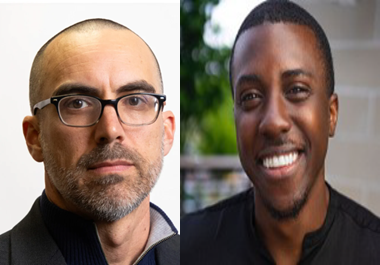
Andrew J. Douglas: Professor of Political Science at Morehouse College.
Jared A. Loggins: Assistant Professor of Black Studies and Political Science at Amherst College.