
The Census Bureau proposes to remove race and ethnicity questions from the 2030 census and exclude many residents from the population used to determine representation in Congress. I submitted the comment below because these changes would make racial inequality harder to prove and millions of people easier to disregard. Calling the census “colorblind” will not end racism. It will weaken the evidence needed to confront it.
Public comments are due November 2, 2026. Read the proposed rule, then submit your own comment at Regulations.gov. Search for USBC-2026-0628. You can submit yous comment anonymously.
My Comment to the Census Bureau
Re: Docket USBC-2026-0628; RIN 0607-AA75
I strongly oppose the Census Bureau’s proposed rule. Withdraw proposed Parts 60 and 70. Do not remove race and ethnicity questions from the 2030 census or exclude residents from the apportionment count because of immigration status.
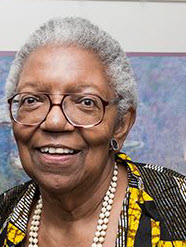
I am Vernellia R. Randall, Professor Emerita of Law at the University of Dayton School of Law, a former nurse practitioner, and founder and editor of Racism.org. The Bureau describes race as an “immaterial personal characteristic” and suggests that the census should be “colorblind.” Calling race immaterial does not make racism immaterial. There is one human race. But American law has made racial classifications matter in the distribution of freedom, citizenship, property, political power, education, housing, and health care. We collect racial data to document what racism does.
I have seen what happens when governments refuse to collect that evidence. Before the 2001 World Conference Against Racism in Durban, I worked with African descendants in Europe whose governments resisted collecting racial and ethnic population data. Officials demanded proof of discrimination, yet their governments had refused to collect the data necessary to produce it. Community studies were dismissed as too small or unrepresentative. The people experiencing discrimination had to prove what their governments chose not to measure.
At Durban, I headed the Health Caucus. We pressed for reliable, disaggregated data because health disparities cannot be addressed by pretending they do not exist. A number of deaths alone tells us little without a population denominator from which to calculate a rate. We need to know who is affected, where, how severely, and whether a policy is making conditions better or worse. Twenty-five years later, the United States proposes to move in the opposite direction.
The harm reaches well beyond health. Racial and ethnic census data helps us examine voting-rights violations, school discipline, housing segregation, employment discrimination, environmental exposure, and unequal access to government services. Census data alone does not prove every civil-rights claim. Other racial datasets would still exist. But without an authoritative nationwide population foundation, those datasets become easier to attack and disparities become harder and more expensive to establish. That shifts the burden onto communities with the fewest resources while protecting the institutions they are trying to hold accountable.
The Bureau invokes response burden and privacy. Those concerns deserve evidence and safeguards, not a categorical prohibition. Has the Bureau shown that removing race and ethnicity questions will improve response enough to offset the loss of small-area, comparable, self-identified data? Has it shown that administrative records or the sample-based American Community Survey can replace that information for civil-rights enforcement and local public-health work? It has not made that case. Improve confidentiality, disclosure protections, question design, and community consultation. Do not destroy the data.
The history of census racial categories includes slavery, Native dispossession, degrading classifications, and misuse of personal information. I do not dismiss that history. It is a reason to protect individual information, respect self-identification, and improve categories that conceal differences within communities. It is no justification for making Black, Latino, Indigenous, Asian, Native Hawaiian and Pacific Islander, Middle Eastern and North African, and multiracial communities less visible.
I also oppose the proposed residence rules. The Fourteenth Amendment calls for apportionment based on the “whole number of persons in each State.” People who live here are governed by our laws and depend on our schools, hospitals, roads, and public services. Excluding residents on the basis of immigration status would distort representation and deepen the harm to communities already at risk of being undercounted. Count every usual resident.
If the government stops collecting racial population data, racism will not disappear. The government will make its consequences harder to prove and easier to deny. It can demand rigorous evidence, reject smaller studies as inadequate, and then claim there is no proven problem to correct. That is the production of official ignorance, not racial equality.
Withdraw both proposed parts. Retain race and ethnicity questions. Count every usual resident. A colorblind census in a racist society is not progress. It is statistical erasure—and statistical erasure protects white racial power.
Vernellia R. Randall
Professor Emerita of Law
Founder and Editor, Racism.org
My fuller analysis: “A Colorblind Census in a Racist Society: We Cannot Eliminate Racial Disparities by Refusing to Count Them” (September 14, 2026).
`
Vernellia R. Randall, Professor Emerita of Law, University of Dayton School of Law. This article is the sole intellectual and scholarly work of Vernellia Randall. ChatGPT was used only as a drafting aid comparable to a research or editing assistant. All concepts, analysis, legal reasoning, interpretations, and conclusions are entirely the author’s own, and the author assumes full responsibility for the content.