
Abstract
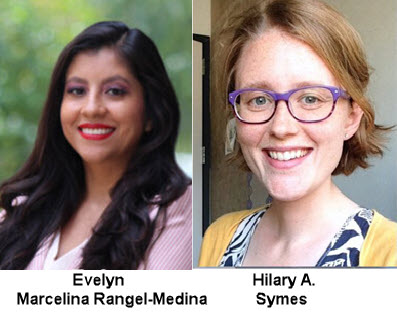
Excerpted From: Evelyn Marcelina Rangel-Medina and Hilary A. Symes, Blood, Soil, and Race: The Perils of Shredding the Fourteenth Amendment, 115 Geo. L.J. Online 1 (2026) (209 Footnotes) (Full Document)
 Race remains a central organizing principle of U.S. citizenship. By extending birthright citizenship across racial lines, the Reconstruction Constitution established the foundations of a fragile multiracial democracy. That transformation also emerged from profound conflict. The sectional crisis was intensified by Dred Scott v. Sandford, and the Civil War culminated in the adoption of the Fourteenth Amendment’s Citizenship Clause.
However, Reconstruction did not eliminate racial hierarchy. Rather, systems of exclusion and subordination, such as citizenism, adapted to new legal and political conditions. Citizenism distributes racialized rights and belonging through immigration and citizenship status, using formally race-neutral language. Although primarily organized around immigration status, citizenism operates alongside race, nationalism, xenophobia, and religion to produce hierarchies of membership and exclusion.
Citizenism enshrined exclusionary measures in immigration and citizenship law, transmitting precarity across generations. The Naturalization Act of 1790 restricted citizenship to “free white person[s],” and Congress did not fully eliminate racial restrictions on naturalization until 1952. Other measures, including the Page Act of 1875, the Chinese Exclusion Acts (1882-1902), and the Undesirable Aliens Act of 1929, used immigration law to regulate access to civil and political rights along racial lines. For example, the Undesirable Aliens Act criminalized entry into the country by specifically targeting Mexican migrants.
is a contemporary mechanism of citizenism. By conditioning birthright citizenship on parental immigration status, the Order sought to reintroduce lineage-based restrictions into a constitutional framework that has long rejected them. The Order would have disproportionately burdened communities that are targeted by racialized immigration policies and exclusionary citizenship law. Efforts to restrict access to birthright citizenship, coupled with mass deportation campaigns, are implemented against a backdrop of demographic anxieties surrounding the increasingly multiracial composition of this country and the rise of white supremacist ideology in mainstream politics.
Since the ratification of the Fourteenth Amendment, numerous unsuccessful congressional measures have sought to re-whiten birthright citizenship by conditioning access to it based on parental immigration status. The Citizenship Clause limited such restrictions by overruling Dred Scott v. Sanford and invalidating the doctrine of partus sequitur ventrem, which used maternal lineage to deny citizenship to Black people. Consistent with the common-law principle of birthright citizenship, Supreme Court precedent, and federal statutes, the Supreme Court in Trump v. Barbara rejected the government’s argument that a child’s citizenship status should depend on the immigration status of the parent.
Trump signed the Order the day he took office a second time. The following day, lawsuits across the country challenged the Order, including in Washington, Maryland, and Massachusetts. Federal district and circuit courts consistently held that the Order conflicted with the Fourteenth Amendment, United States v. Wong Kim Ark, and federal citizenship statutes. Despite the absence of a circuit split, the Supreme Court granted certiorari before judgment and consolidated the litigation under Trump v. Barbara. The Court heard oral argument on April 1, 2026, and delivered its highly anticipated opinion on June 30, 2026.
Although the Court ultimately invalidated the Order, the litigation reveals that this country’s commitment to racial integration remains deeply contested, despite the Reconstructionists’ greatest aspirations for ending racial subordination. The majority reaffirmed the holding of Wong Kim Ark, that the Fourteenth Amendment made territorial birth, rather than parental lineage, the principal constitutional rule of birthright citizenship. The concurrence rooted its argument in “the entire point of the Second Founding: The Reconstruction Amendments were an anticaste, antisubordination reset for the Nation, not a mere spot treatment for the dark stain of slavery.” The dissents, by contrast, advanced competing understandings of allegiance and political membership that would have effectively reintroduced lineage-based restrictions into our constitutional framework.
This Article argues that the competing opinions articulated across the lengthy Trump v. Barbara decision illuminate the continuing operation of citizenism even after the Court invalidated the Order. Indeed, the Trump Administration’s continued efforts to restrict birthright citizenship, including its subsequent Executive Orders, demonstrate the fragility of our multiracial democracy. This Article then contends that the Order and similar mechanisms to curtail birthright citizenship seek to racially subordinate mixed-status families of color by perpetuating “multigenerational illegality.”
The Article’s argument proceeds accordingly. Part I briefly summarizes the historical and legal underpinnings that led to the adoption of the Fourteenth Amendment’s Citizenship Clause. Considering this context, it examines the litigation in Trump v. Barbara and the Supreme Court’s decision. This Part argues that although race-making was central to the Order, explicit mentions of race were largely absent from the litigation record, except for the Solicitor General referring to immigrants as “illegal aliens.”
Part II explores the racialized principles of birthright citizenship through the lens of citizenism. By disaggregating national origin data for undocumented and temporary-status populations targeted by the Order, the data show that restrictions on birthright citizenship primarily affect communities of color originating from the Global South. At the national level, people of Mexican origin constitute the largest affected population. At the broader regional and racial-group levels, Latinx/e populations constitute the largest affected group, while Asian-origin populations likewise comprise a significant affected population. This Part also shows that comparable congressional or constitutional restrictions on birthright citizenship would produce similar racialized outcomes upon mixed-status communities of color.
Part III examines the multigenerational harms this constitutional regression would inflict on mixed-status families of color. These harms include building inequality within the family structure, facilitating economic exploitation, exacerbating health disparities, and increasing the risk of statelessness. In outlining these harms, this Part analyzes how restricting birthright citizenship based on parental immigration status would transmit multigenerational illegality across generations for mixed-status families of color.
[ . . . ]
Trump v. Barbara resolved the immediate challenge to birthright citizenship, but it did not resolve the broader constitutional conflict over citizenship that citizenism seeks to reconstruct. The litigation itself illustrates why Reconstructionists sought to place the “great question of citizenship” beyond ordinary political contestation. The majority concluded that the Fourteenth Amendment rejected inherited legal status and reaffirmed territorial birth as the constitutional foundation of birthright citizenship. The separate opinions advanced competing historical accounts that would make parental allegiance, rather than territorial birth, constitutionally significant. Yet, as Justice Jackson’s concurrence observed, Reconstructionists did not conceive of citizenship as a zero-sum contest between formerly enslaved people and immigrants. Instead, “Freed Blacks fought for the shared humanity of all people,” and the Reconstruction Constitution ultimately linked “the fates of all” in rejecting systems of inherited subordination. That understanding reinforces the central premise of this Article: the Citizenship Clause was designed to dismantle lineage-based systems of racial subordination that would be reinstituted if restrictions on birthright citizenship are determined by parental immigration status.
Although the Supreme Court foreclosed the Order’s implementation, the broader project of citizenism remains. Indeed, the Trump Administration’s subsequent actions demonstrate that efforts to restrict birthright citizenship continue notwithstanding Trump v. Barbara. The demographic evidence presented in this Article shows that conditioning citizenship on parental immigration status would disproportionately affect communities of color. Moreover, the multigenerational harms examined in this Article--including the manufacturing of family inequality, exacerbating economic exploitation, magnifying adverse health outcomes, and increasing the risk of statelessness-- show that birthright citizenship is a structural safeguard against the perpetuation of multigenerational illegality.
The constitutional stakes, therefore, extend well beyond the Order. As the population of people of color continues to increase, citizenist projects are likely to continue relying on formally race-neutral mechanisms to reproduce racial hierarchy through immigration and citizenship status. The enduring promise of the Reconstruction Constitution and of preserving the foundations of a multiracial democracy demands vigilance to prevent the reemergence of hereditary hierarchy in new legal forms.
Evelyn Marcelina Rangel-Medina is Associate Professor of Law at Temple University James E. Beasley School of Law and a Non-Resident Fellow at the Fred T. Korematsu Center for Law and Equality, University of California, Irvine School of Law.
Hilary A. Symes holds a Ph.D. in Anthropology from Temple University and was a J.D. candidate and research assistant at Temple University James E. Beasley School of Law.